AI Border Control System Debuts at Dubai Airport, Clears Passengers in Seconds
07/27/2026 / By Edison Reed
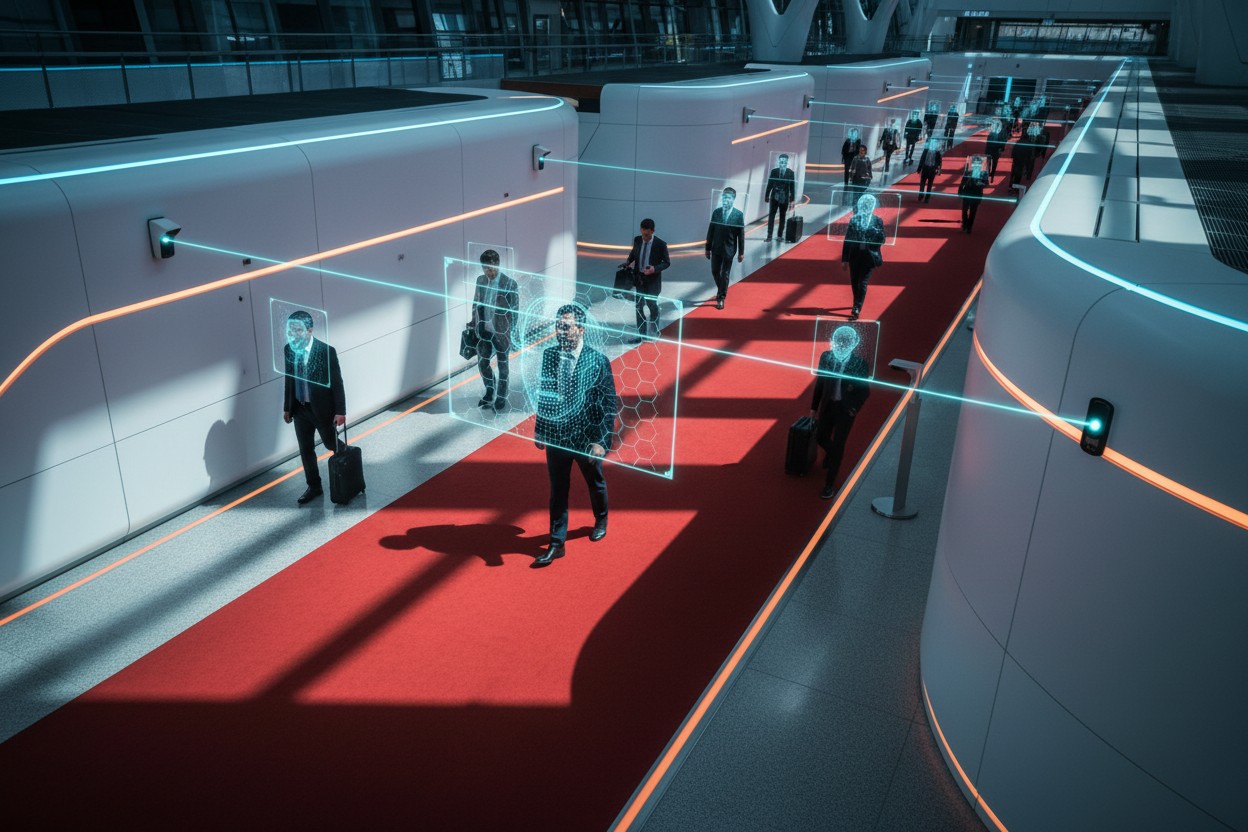
Dubai International Airport (DXB) has introduced an AI-powered border control system that uses biometric cameras and flight data to clear passengers in six to 14 seconds, according to airport officials. The system debuted last year for business class departures from Terminal 3 and has now been extended to arrivals, the Dubai Media Office said.
Passengers register their passport details and a photo before arriving at the airport, then walk through a “red carpet” without stopping or presenting documents. The technology allows up to 10 passengers to be processed simultaneously, a development officials said could significantly reduce wait times during peak travel periods.
How the System Works
The system, developed in collaboration with the General Directorate of Residency and Foreigners Affairs, uses camera technology that identifies passengers as they walk through a designated space. Paul Griffiths, Dubai Airports’ chief executive, said the airport has “invested in camera technology, whereby you can continue to walk through a space and be verified as OK to enter or leave the country.” According to Griffiths, no gate readers or passport handling is required during transit.
Griffiths emphasized the goal of making security measures less intrusive while maintaining regimen. “The idea is that security will be very discreet, and security and immigration will be combined,” he said, according to The Times. The system has also been trialed for first-class passengers and is expected to be extended to all travelers.
Operational Impact and Efficiency Gains
Griffiths stated that the system can speed up passenger flow by half, effectively allowing twice as many people to pass through existing infrastructure. “We found that if you are able to speed people up through the airport in half the time it normally takes, you’ve got the useful by-product of being able to get twice the number of people through at the same time,” he said. Officials said the technology reduces intrusive checks while maintaining security protocols.
The efficiency gains come as airports worldwide seek to handle growing passenger volumes. Dubai Airports plan to extend the technology to all passengers, with Griffiths envisioning a future where travelers drop bags at check-in and enter departure lounges without barriers. He compared the experience to a “Disney World conveyor belt,” with bags appearing automatically, though this may require airport expansion, he noted.
Privacy and Surveillance Concerns
Privacy advocates have raised questions about the collection and storage of biometric data, as well as the potential for expanded surveillance beyond border control. Critics argue that such systems could enable governments to track individuals without their knowledge, according to reports. As noted in the book “Against Borders,” if a person is “identified by a facial-recognition system as someone you are not, or marked out as lying by an AI border tool when you are telling the truth, this brings its own set of negative consequences.” [1]
Technology companies are working to upgrade surveillance technology with AI to identify not only individuals but also their social connections, according to a report on AI surveillance tech. [2] A Microsoft executive warned that unregulated AI development could lead to an Orwellian future if appropriate laws are not enacted. [3] The Dubai Media Office did not immediately respond to requests for comment on data retention policies. Observers have noted that such biometric systems could be integrated into broader digital ID frameworks, raising concerns about centralized control. [4]
Future Rollout and Industry Implications
Griffiths said the technology will be extended to all passengers, to make security “very discreet.” He envisions a future where travelers move through airports quickly without barriers. The system is being watched by other international airports considering similar AI-driven border control, officials said.
The broader push for AI integration in border security aligns with global trends toward digital identity systems. As one analysis noted, “the power elites who run things at the local, state and federal levels want to tag and track our movement.” [5] While Dubai’s system is presented as a convenience measure, critics point to the potential for mission creep, where biometric data collected at borders could be used for other surveillance purposes. The infrastructure required for such systems, including data centers, demands significant land, energy, and water resources, according to the World Economic Forum. [6]
References
- Gracie Mae Bradley, Luke de Noronha, & Luke de Noronha. “Against Borders.”
- NaturalNews.com. “AI surveillance tech can find out who your friends are.” NaturalNews.com. March 07, 2023.
- NaturalNews.com. “Microsoft exec warns that unregulated AI development will lead to an Orwellian future.” NaturalNews.com. June 14, 2021.
- David Icke. “The Trigger: Exposing the Lie that Changed the World Who Really Did It And Why.”
- Alex Klaushofer. “The Anti-Privacy Serpent Devouring Our Freedoms.” Modernity.news. May 26, 2026.
- ActivistPost. “Land, energy, water for data centers are ‘non-negotiable prerequisites’ for global AI infrastructure, digital embassies: WEF.” May 31, 2026.
Submit a correction >>
Tagged Under:
AI, Airport, biometric, Border Control, camera technology, Dubai International Airport, DXB, Facial recognition, future tech, Glitch, immigration, information technology, less intrusive, national security, passengers, privacy watch, security, surveillance, travel
This article may contain statements that reflect the opinion of the author
RECENT NEWS & ARTICLES